Balcony Waterproofing Failure: When Is Re-Waterproofing Enough?
By Brownlow Building · Published 2026-08-31 · Building Advice
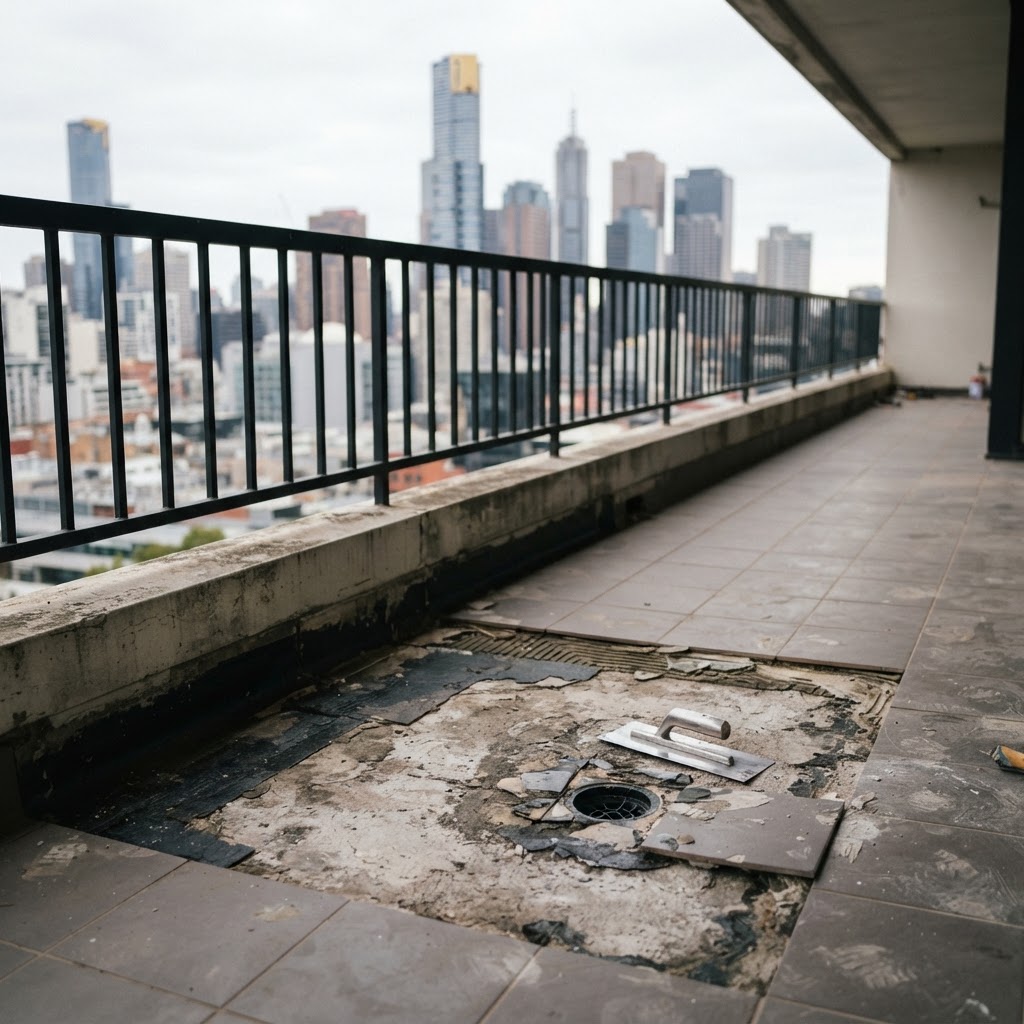
When a balcony leaks, one of the first proposed solutions is often: remove the tiles, replace the waterproofing, retile.
And sometimes that is exactly the correct repair.
If the balcony structure is sound, the falls and drainage are adequate, penetrations and thresholds are correctly detailed and the primary failure is confined to the waterproofing system, a properly designed re-waterproofing and retiling project may provide the appropriate solution.
The problem arises when the membrane is treated as the only possible cause. For broader context, see our article on why balconies leak or our Balcony Repairs Melbourne service page.
When re-waterproofing may be enough
A strip-down, re-waterproof and retile approach may be appropriate where investigation establishes that:
- the underlying structure remains sound
- the substrate can be satisfactorily prepared
- adequate falls exist
- drainage is functioning correctly
- thresholds and upstands are adequately detailed
- balustrade penetrations are correctly managed
- there is no significant concealed deterioration
- the primary failure is associated with the existing waterproofing system
The existing finishes are removed, the substrate is prepared, any necessary local repairs are undertaken and an appropriate waterproofing and finishing system is installed.
When replacing the membrane is not enough
Replacing waterproofing without correcting underlying construction problems simply rebuilds the new system over the same failure conditions.
Further rectification may be required where there are:
Insufficient falls
If water does not drain properly, the geometry of the balcony may need to be corrected before waterproofing.
Drainage deficiencies
Outlet position, capacity and overflow provisions may require assessment and alteration.
Incorrect upstands or thresholds
The membrane needs appropriate interfaces with adjoining walls and openings.
Balustrade penetrations
Fixings passing through waterproofed areas require appropriate detailing.
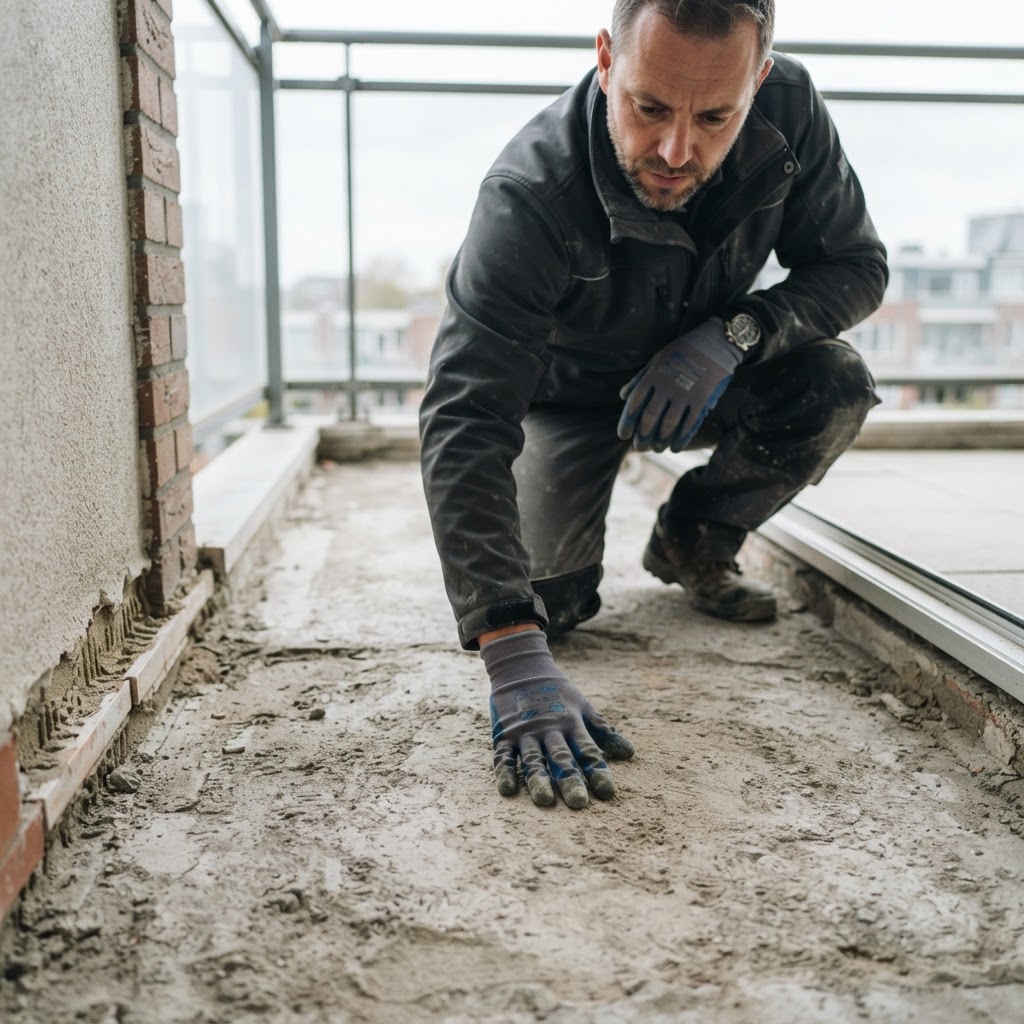
Substrate deterioration
Water can damage sheeting, screeds, timber or other construction beneath the tiles.
Structural damage
Long-term leakage may require repairs extending far beyond the waterproofing layer.
Waterproofing is a system, not simply a product
The NCC references AS 4654.1 for external above-ground waterproofing materials and AS 4654.2 for design and installation. In practical terms, successful waterproofing depends on far more than selecting a membrane product. The substrate, drainage, falls, movement, junctions and penetrations all influence performance.
Victorian research has also found that balcony water-ingress failures involve not only membranes but deficiencies in design details, vertical terminations and penetrations.
Brownlow's approach
We do not automatically recommend full reconstruction.
Nor do we automatically assume another membrane will solve the problem.
The repair methodology follows the investigation.
See how Brownlow approaches leaking and damaged balconies
Builder-led investigation and rectification that establishes the true cause before recommending the repair.
Explore Balcony Repairs Melbourne