Why Is My Balcony Leaking? 8 Common Causes of Balcony Water Ingress
By Brownlow Building · Published 2026-08-31 · Building Advice
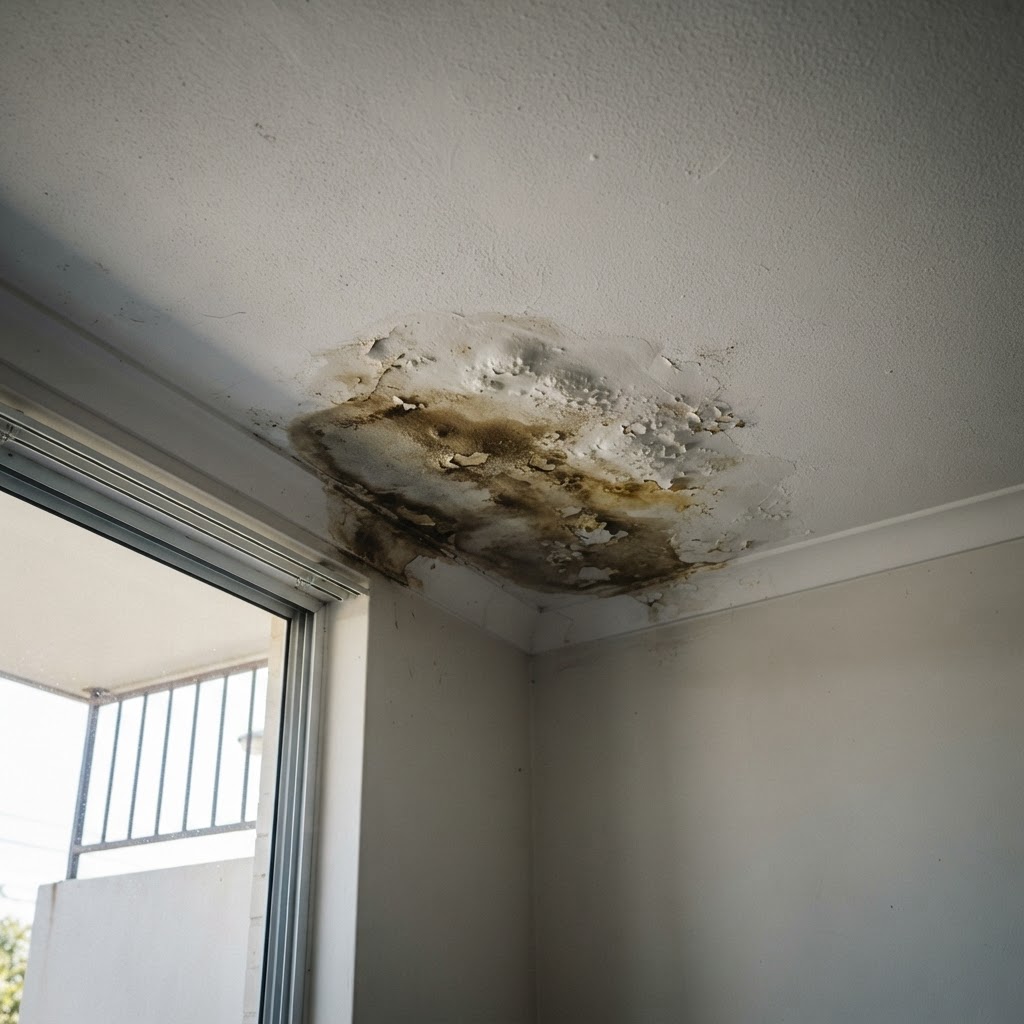
A leaking balcony can look deceptively simple. Water appears on the ceiling below, a stain develops beside a door or tiles remain wet long after rain, so it is easy to assume the waterproofing membrane has failed.
Sometimes it has.
But a balcony works as a complete water-management system. The substrate, falls, drainage, membrane, thresholds, upstands, penetrations, balustrade connections and adjoining walls all have to work together.
That is why repairing the visible symptom without establishing how water is entering and why it is not being safely discharged can result in the leak returning. For broader background, see our guide to water ingress in homes or our Balcony Repairs Melbourne service page.
Eight common causes of a leaking balcony
1Failed waterproofing
Waterproofing membranes form an important part of the external balcony system. Poor installation, deterioration, movement, unsuitable detailing or damage can compromise the membrane and allow moisture to enter the construction beneath.
A failed membrane may require removal of the existing finishes, substrate preparation, installation of a new waterproofing system and reinstatement of the finished surface. But the membrane should not automatically be blamed before the other parts of the balcony are assessed.
2Insufficient falls
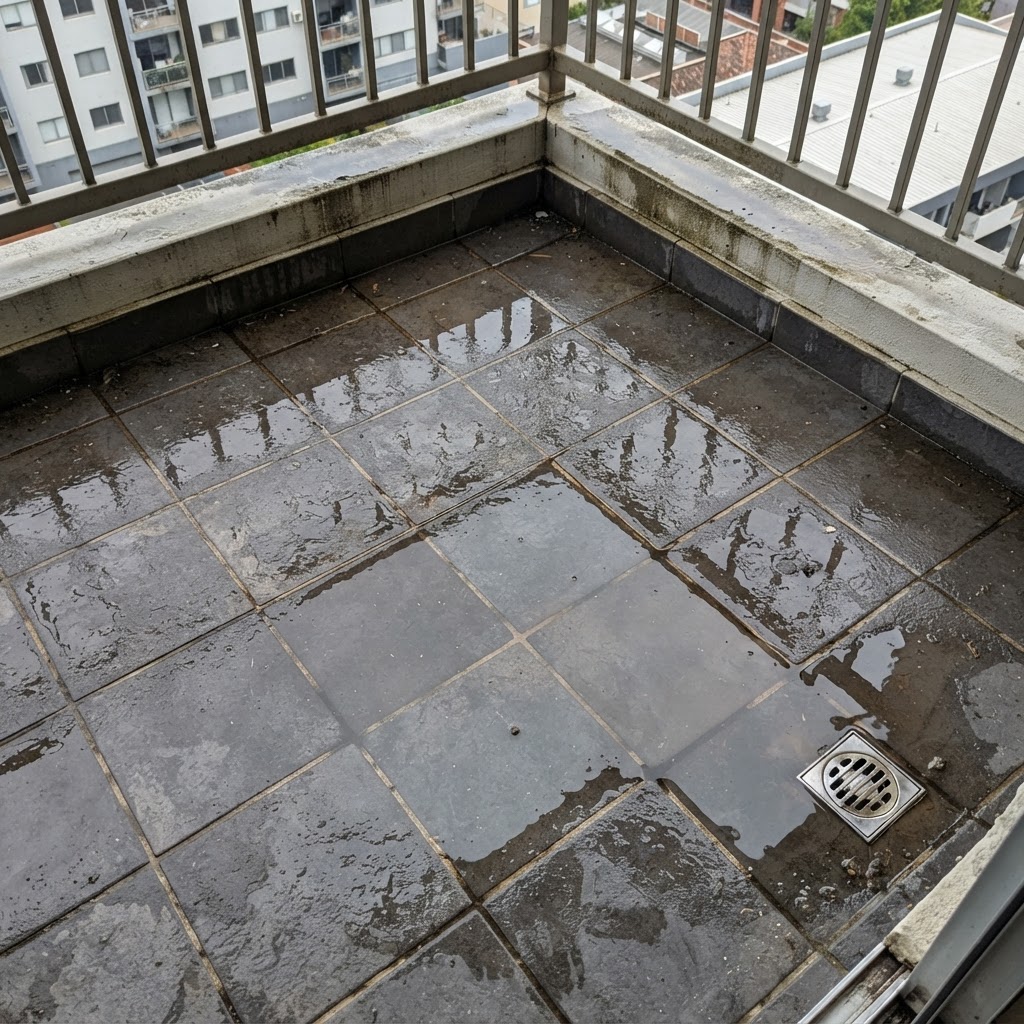
A balcony needs to direct water toward its drainage points. Where the substrate or screed does not provide adequate falls, water can remain on the balcony after rainfall. This is known as ponding.
Persistent ponding increases the amount of time water is sitting against waterproofing, junctions and penetrations and can expose weaknesses elsewhere in the system. Current BPC balcony guidance identifies inadequate falls and drainage as major contributors to balcony water ingress.
3Poor drainage
Even a well-waterproofed balcony can have problems if water cannot escape efficiently. Issues may include incorrectly positioned outlets, undersized drainage, blocked outlets, inadequate overflow arrangements or poor coordination between the balcony and its stormwater system.
The BPC warns that blocked primary drainage combined with insufficient overflow capacity can result in ponding and water entering the building.
4Balustrade penetrations
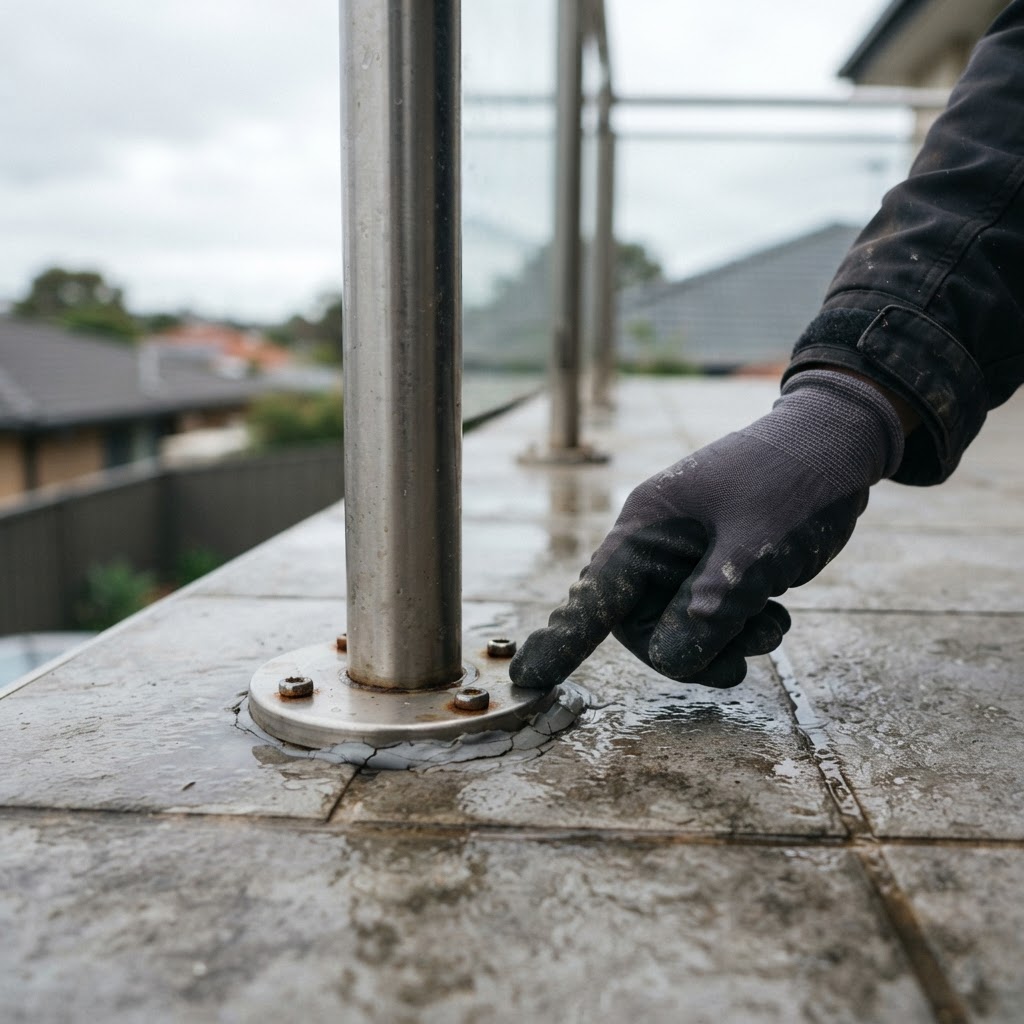
Balustrade posts and fixings often penetrate or interface with waterproofed areas. If these connection points are poorly detailed, inadequately sealed or deteriorate over time, they can provide a direct pathway for water into the balcony construction.
Importantly, the point where water enters may be some distance from where the damage eventually becomes visible.
5Incorrect waterproofing upstands
Waterproofing does not simply run horizontally underneath the tiles. At walls, door openings and other vertical interfaces, the waterproofing system needs correctly designed and installed terminations and upstands. Incorrect termination heights or poor detailing at these junctions can allow water to bypass an otherwise sound membrane.
Victorian research into moisture-related building disputes has specifically identified problems involving balcony vertical terminations and penetrations.
6Door thresholds and wall junctions
The interface between an external balcony and the internal building is particularly important. Levels, drainage, waterproofing, flashing and door systems must work together to prevent external water crossing into the home.
Leaks that appear around sliding doors or internal flooring should not automatically be treated as simple sealant failures.
7Movement or substrate deterioration
Buildings move. Temperature changes, settlement, structural movement and deterioration can cause cracking or displacement within balcony substrates and junctions.
If the underlying construction moves or deteriorates, the waterproofing and tiled finish above it may also be affected.
8Previous repairs that did not address the cause
Silicone, regrouting, coatings or localised repairs may sometimes be appropriate. But if the balcony has inadequate falls, defective drainage, poorly detailed penetrations or deterioration beneath the surface, a surface repair may only temporarily hide the problem.
The key question is not simply “Where is it leaking?” It is: Why is water getting there in the first place?
Establish the cause before the repair
Brownlow Building assesses leaking balconies as complete building systems before recommending the repair methodology. Sometimes the right solution is re-waterproofing and retiling. Sometimes the problem requires correction of falls, drainage, thresholds, penetrations or damaged underlying construction.
The Victorian Building Practices Commission (BPC) publishes consumer guidance on identifying water ingress on balconies, decks and terraces. Read the BPC guidance on water ingress from balconies, decks and terraces.
Concerned about a leaking balcony?
Explore our builder-led investigation and rectification service for leaking and damaged balconies across Melbourne.
Explore Balcony Repairs Melbourne