Why Water Pools on Balconies: Falls, Drainage and Ponding Explained
By Brownlow Building · Published 2026-08-31 · Building Advice
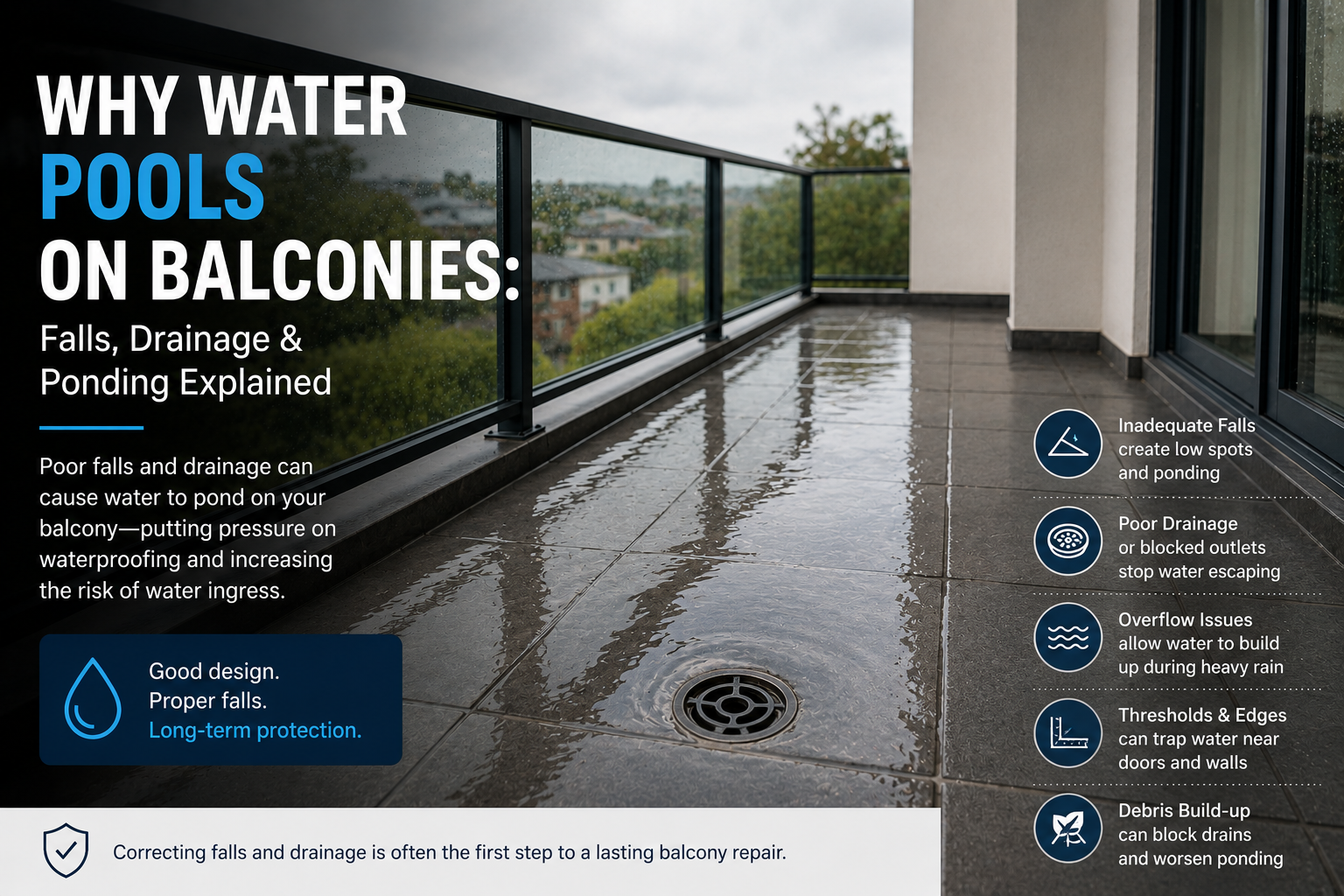
After rain, a balcony should shed water toward its drainage system.
If pools remain for extended periods, the issue deserves attention.
Ponding is not always proof that the balcony is leaking, but it is an important warning sign because prolonged exposure places additional pressure on waterproofing systems, junctions and penetrations. For the broader picture, see our articles on why balconies leak and balcony repair vs full rebuild.
What are balcony falls?
A fall is the slope built into the balcony surface to direct water toward drainage points.
Current Victorian Building Practice guidance states that structural substrates and associated waterproofing should incorporate a minimum fall of 1:80 toward the drainage system under the guidance it sets out.
The important principle for homeowners is simple:Water needs a deliberate path away from the building.
For current Victorian building practice guidance on balcony design and stormwater drainage, refer to guidance published by the Victorian Building Authority.
Why balconies pond
Common reasons include:
- inadequate falls during original construction
- low areas in screeds or substrates
- settlement or movement
- poorly positioned drains
- blocked outlets
- inadequate outlet capacity
- poor overflow design
- later alterations that disrupt drainage
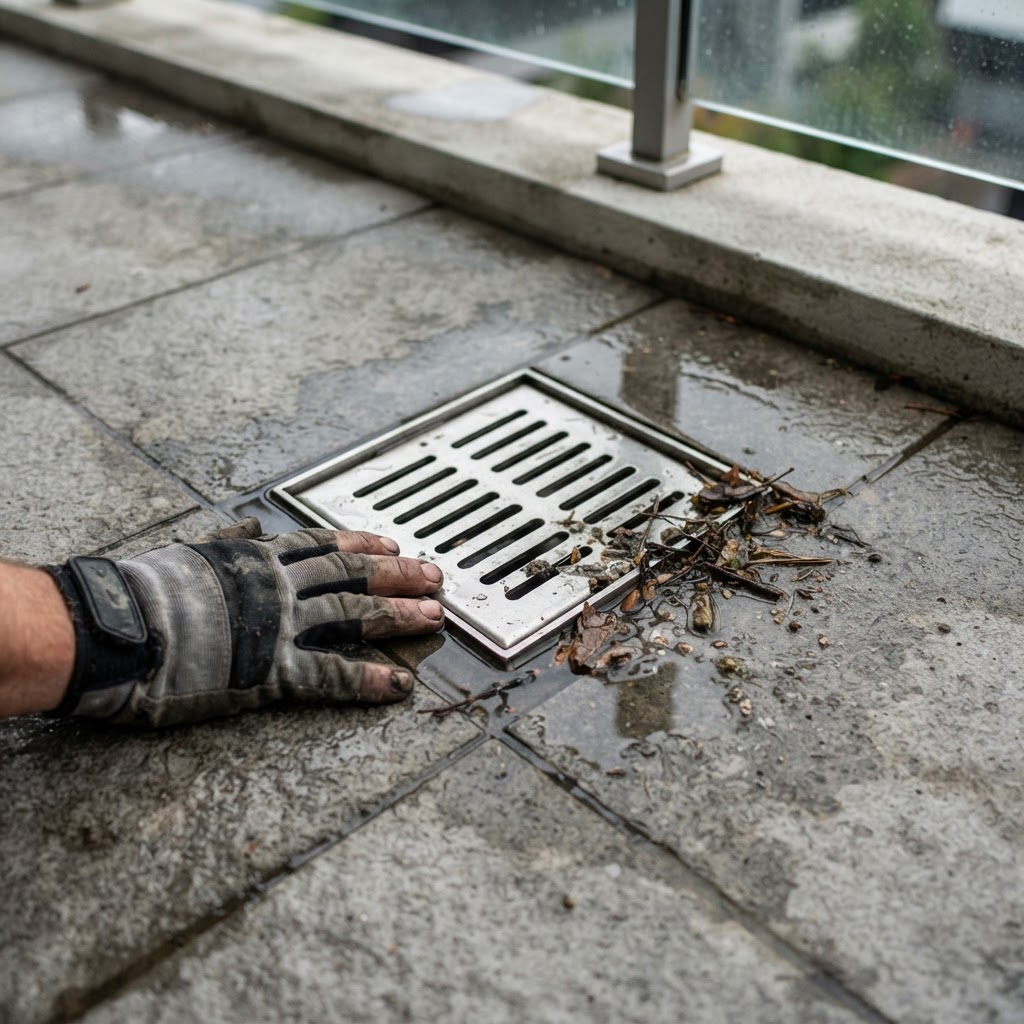
- build-up of debris
Why drainage matters as much as waterproofing
Waterproofing is intended to protect the underlying building, but it should form part of a broader water-management strategy.
Victorian building practice guidance notes that a blocked outlet combined with insufficient overflow capacity and poor balcony design can cause water to pond and enter the building.
That is why repeatedly coating or resealing a balcony with poor drainage may not address the real problem.
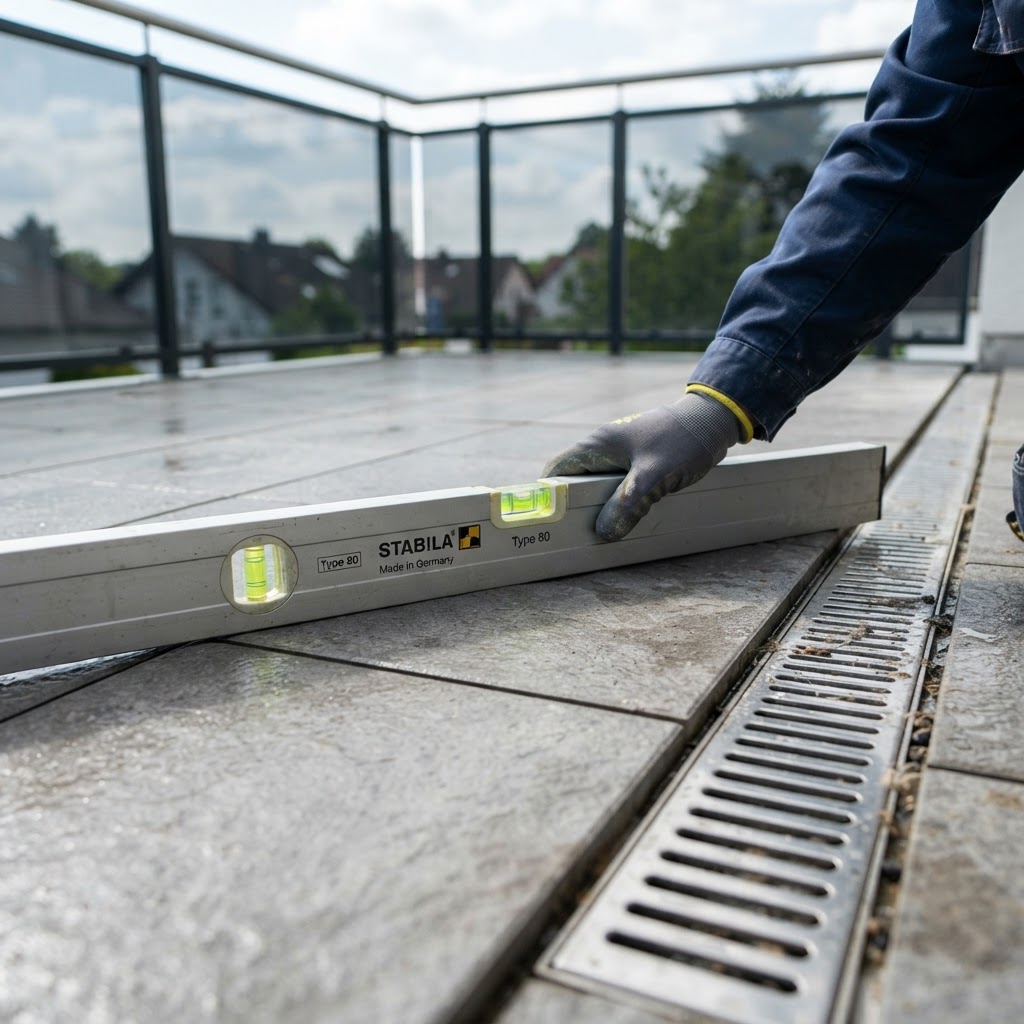
Can falls be corrected?
Potentially.
The appropriate method depends on the existing construction, available levels, drainage arrangement, door thresholds and other constraints.
In some cases rectification may involve removing the existing finishes and reconstructing the screed or substrate to establish appropriate falls before the new waterproofing system is installed. More complicated balconies may require hydraulic, building or design advice.
What should you look for?
If you are repeatedly seeing these signs, investigate why the water is not leaving the balcony correctly.
Brownlow investigates falls, drainage and underlying balcony failures
Falls and drainage are reviewed as part of complex balcony rectification — because correcting ponding is often the first step to a lasting repair.
Explore Balcony Repairs Melbourne